Enquire Now



Enquire Now
 Published: September 21, 2026
Last Updated: September 21, 2026
Published: September 21, 2026
Last Updated: September 21, 2026
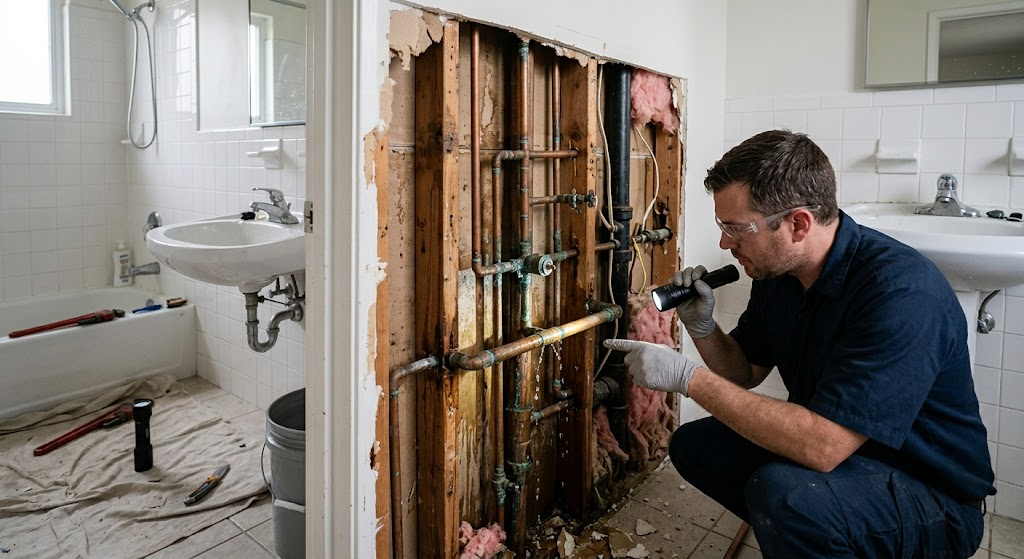
Behind every bathroom wall sits a plumbing time bomb. Supply lines, drain pipes, and a shower valve all jampack into one tight cavity. Tile seals it completely with zero room for error.
That crowding is the real reason bathroom plumbing problems behind walls catch homeowners off guard. A pinhole leak can spray for months before anyone spots a brown water stain on the ceiling.
Shoddy installation and fluctuating pressure cause these hidden leaks. Contractors sometimes rush jobs and fail to glue PVC joints properly. The constant hammering of water weakens these specific points over time. Water then sprays directly against the back of your drywall.
Pinholes in aging copper piping also create severe bathroom plumbing problems behind walls. Acidic water wears down that raw metal from within, slowly but surely. If you’ve got older copper pipes it might be smart to swap them out for PEX tubing today. This newer option flexes and bends more gracefully, instead of snapping or giving up under pressure.
Hard water scale buildup poses another threat to hidden pipes. Minerals collect inside the supply lines and restrict the natural flow. The excess pressure forces water out of the weakest connection points. Install a whole-house water softener to protect your internal pipes.
Standard plumbing systems begin failing around the thirty-year mark. Brass and cast iron last longer but cheap galvanized steel rusts fast. Look up your home construction date right now. Calculate the exact age of your current pipes.
Older homes carry a massive risk of severe bathroom plumbing problems behind walls. Materials used decades ago cannot handle modern municipal water pressure demands. Upgrade your older supply lines before they shatter completely. A planned repiping job saves thousands of dollars in emergency damage cleanup.
Temperature fluctuations also destroy the lifespan of your plumbing. Uninsulated pipes expand and contract with the changing winter seasons. This daily physical movement grinds pipe joints apart over the years. Wrap your accessible pipes in thick foam insulation today.
You must rely on smell and touch to detect hidden leaks early. A persistent musty odor signifies standing water rotting the wood inside your framing. Press your bare hand firmly against the drywall near your shower. Soft or spongy drywall means water is pooling right behind the paint.
Invest in a simple digital moisture meter from the hardware store. Scan the walls around your plumbing fixtures once a month. You can catch bathroom plumbing problems behind walls before the black mold sets in. Rip out wet drywall the second you confirm a leak.
Listen closely to your walls late at night when the house is silent. A faint dripping sound indicates an active breach in your supply line. Turn off every faucet and check your main water meter dial. Act fast before the escaping water damages the lower floors.
Most standard insurance policies cover sudden and accidental water damage. They rarely cover damage resulting from long-term neglect or poor maintenance. Read your specific policy documents today. Check the fine print regarding water damage limits and mold remediation caps.
Insurance adjusters fight hard to deny claims related to bathroom plumbing problems behind walls. They will argue you should have noticed the warning signs earlier. Document every single plumbing repair you make throughout the year. Hire a professional to draft a detailed diagnostic report.
Never throw away the broken pipe or the failed fitting. Your insurance adjuster needs to see the physical evidence of the metal failure. Place the broken components in a plastic bag for safe keeping. Fight for your coverage using undeniable physical proof.
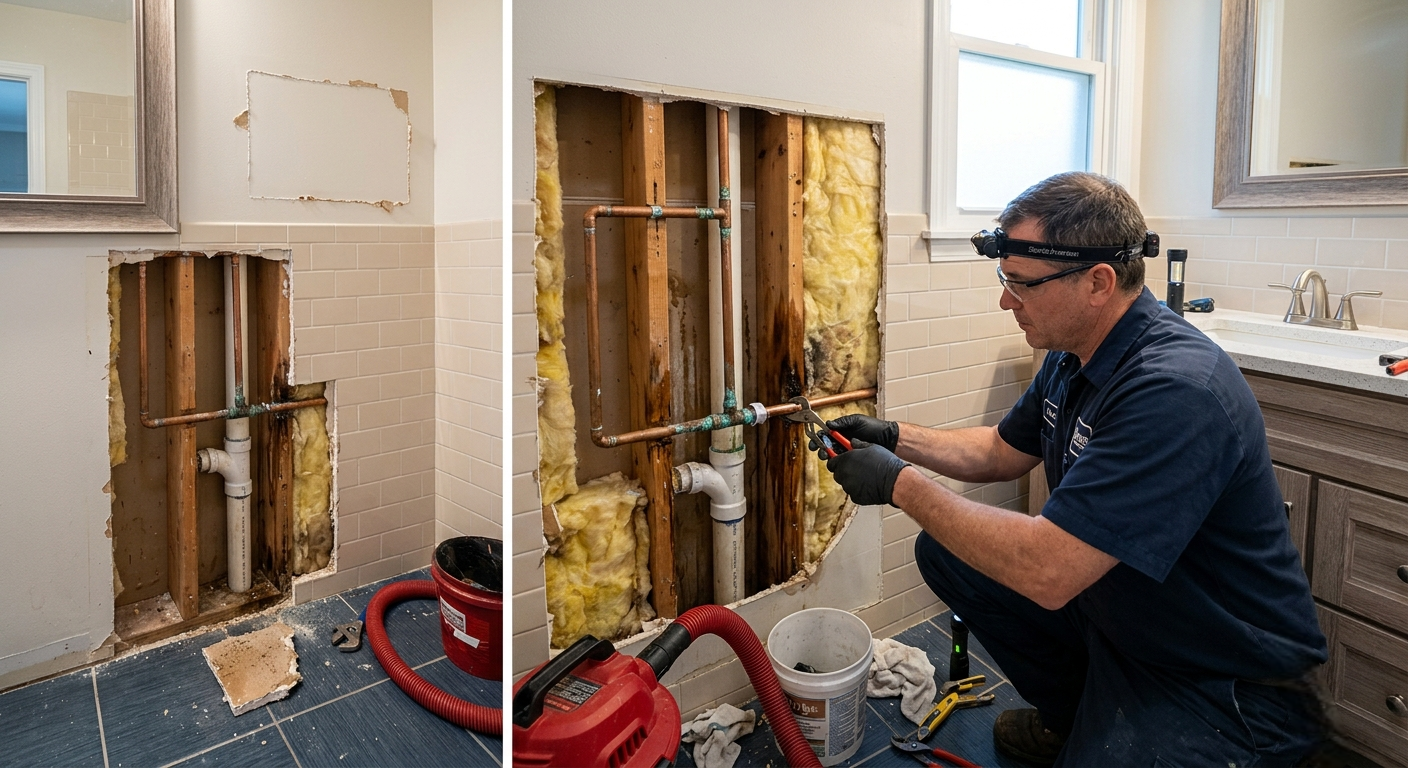
Turn off your main water shutoff valve the exact moment you suspect a leak. Do not waste time trying to isolate the specific toilet or sink. Locate this main valve now and physically test it. A frozen valve does you zero good in an active emergency.
Set up heavy-duty fans and dehumidifiers immediately after stopping the water. Airflow is your only defense against rapid mold growth. Dealing with toxic mold makes standard bathroom plumbing problems behind walls look incredibly cheap. Tear out any wet baseboards to let the wall cavity breathe.
Drill small weep holes at the base of the wet drywall. This lets trapped water escape onto the tile floor. Catch the draining water in a bucket or heavy towels. Call a water mitigation specialist if the flooding covers more than ten square feet.
Regular pressure testing prevents the vast majority of silent pipe failures. Buy a basic pressure gauge and attach it to your outdoor spigot. A reading above 80 PSI means your pipes are taking massive daily damage. Install a pressure reducing valve immediately.
Schedule a video camera inspection of your main drain lines every two years. Tree roots crush buried pipes and cause severe sewage backups. These backups create intense pressure that blows apart hidden connections inside your house. Stop waiting for disaster to strike your property.
Flush your water heater tank annually to remove corrosive sediment. This hard sediment eventually travels into your pipes and degrades the joints. Routine maintenance solves bathroom plumbing problems behind walls before they ever exist. Protect your major plumbing investment through aggressive scheduled upkeep.
We understand the dread of tearing open a perfectly good bathroom wall. Allowing bathroom plumbing problems behind walls to fester destroys your home equity. We rip out the guesswork and pinpoint the exact source of your pipe failure fast. Call Magnificent Plumbing & Rooter today and force us to find the hidden leak.