Enquire Now



Enquire Now
 Published: September 11, 2026 10:31 am
Last Updated: September 11, 2026 10:43 am
Published: September 11, 2026 10:31 am
Last Updated: September 11, 2026 10:43 am
Don’t just sit there staring at that brand-new rubber part. If your toilet is still running after you replace the flapper, then it’s usually a tight chain or a corroded flush valve seat. Sometimes it’s an overflowing fill valve too, and in other situations you might have a cracked overflow tube. You fixed the most obvious point of failure. Now you must test the surrounding mechanical parts to find the real leak.
Hearing that endless hiss of water drives up your anxiety and your utility bill as well. You assumed swapping a cheap part would solve the issue instantly. Plumbing hardware ignores your assumptions. Grab a flashlight and lift the heavy porcelain lid off the tank again. Get comfortable. We are going to audit this system methodically.
The way a failed seal works means water keeps running into the bowl, pretty much all the time, if even one small part upsets the closure. Putting new rubber over a torn, uneven opening won’t really fix it. Water always seeks the route of least resistance. So, you need to spot the precise mechanical breakdown, not the “surface” problem.
Suppose that the tank is a basic bucket with a plug in the bottom and a garden hose filling the top. When the plug sits crooked, the bucket drains. A hose that never shuts off forces the bucket to overflow. Your toilet keeps running after replacing the flapper because one of those two basic functions failed. Stop guessing and start observing the flow pattern.
A chain that is even one link too tight breaks the seal at the bottom of the tank. Look directly at the metal or plastic linkage connecting the flush lever to your new part. You want a slight loop of slack hanging freely. Tension keeps the rubber lifted off the rim.
Leaving the chain tight is like leaving a car door cracked open. The cabin light stays on, and the battery dies. Water continuously escapes underneath the rubber edge. Unhook the small metal clip and move it down one or two links.
Test the lever immediately. Push the handle down and watch the drop. The rubber must hit the bottom flat and heavy. If the toilet keeps running after replacing the flapper, this chain tension is your most likely culprit.
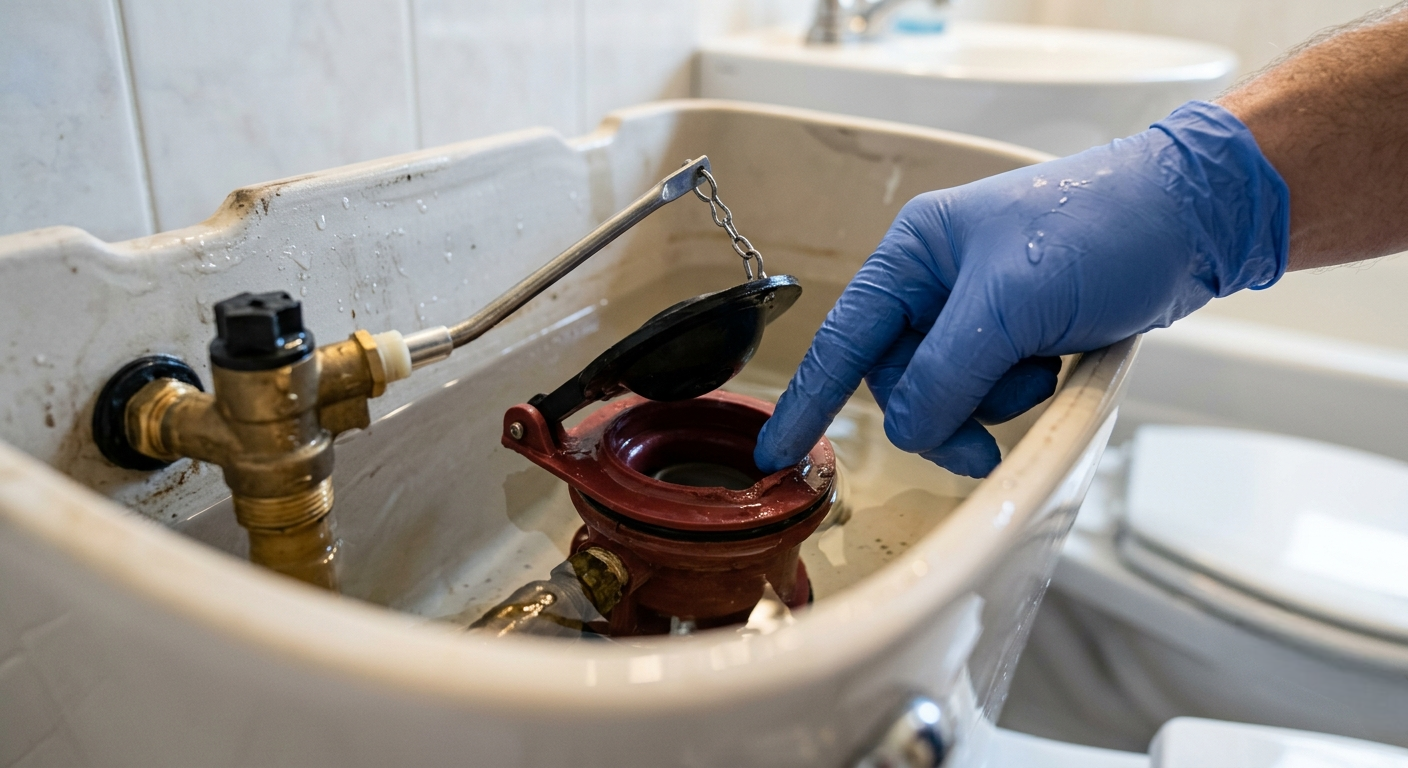
Hard water minerals score and pit the plastic seat, creating microscopic channels for water to escape. You snapped a pristine rubber disc onto a degraded surface. The mating surface must be entirely smooth to hold back gallons of pressure. Run your bare finger around the circular rim opening at the bottom.
Demand a clean mating surface. Putting a new flapper on a jagged seat acts like putting a brand-new tire on a bent rim. The air leaks out immediately regardless of the tire quality. Calcium and lime buildup form hard deposits resembling sandpaper. You cannot seal water against sandpaper.
Drain the tank completely using a sponge. Scrub the plastic opening gently with a scouring pad to remove the mineral crust. Wipe it clean and test the flush again. If your toilet keeps running after replacing the flapper after a thorough cleaning, the plastic assembly requires full replacement.
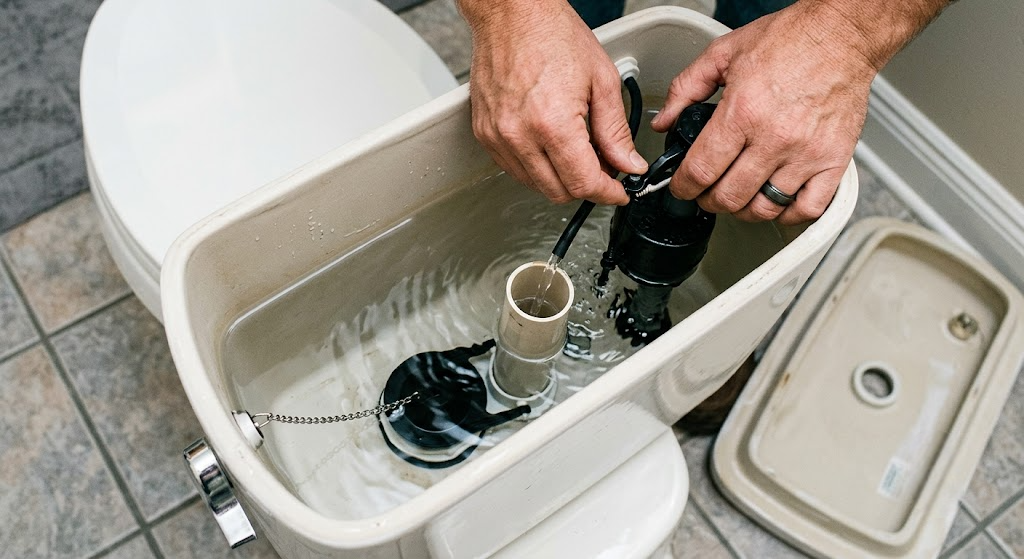
A broken or improperly adjusted water level causes fluid to breach the open pipe in the middle of the tank. Shine your flashlight at the tall plastic tube standing near the center. The water line must sit about one inch below the rim of that open pipe. Fluid spilling over the top signals a different mechanical failure.
Your toilet keeps running after replacing the flapper in this scenario because the tank thinks it needs more water. The system continuously dumps the excess straight down the drain to prevent flooding your bathroom floor. This specific sound mimics a bad seal perfectly.
Locate the adjustment screw on your fill valve. Turn it counterclockwise with a flathead screwdriver to lower the float. Flush the system and watch the refill cycle stop before reaching the top of the open pipe.
A deteriorated internal gasket inside the fill valve prevents the mechanism from stopping the incoming water supply. Isolate this component by lifting the float arm manually with your hand. The water flow must shut off completely the moment you apply upward pressure. A continued hiss means the valve failed internally.
The fill valve acts as the gatekeeper for your home’s water pressure. Over time, debris from city lines tears the delicate rubber diaphragms inside the plastic housing. You cannot patch or repair this specific internal mechanism.
Turn off the angle stop behind the bowl immediately. Drain the remaining water and unscrew the mounting nut underneath the porcelain. When a toilet keeps running after replacing the flapper, swapping out a worn fill valve usually provides the final cure.
If your toilet keeps running after replacing the flapper, consult this diagnostic table to pinpoint the exact failure point. Review this quick mechanical audit to isolate your specific symptom. Do not buy replacement components until you verify the precise malfunction.
| Symptom | Probable Cause | Immediate Action |
| Water spills into open pipe | Fill valve set too high | Adjust float screw counterclockwise |
| Water level stays below pipe | Bad seal at the bottom | Check chain slack and seat condition |
| Hissing continues when float is lifted | Broken fill valve diaphragm | Replace entire fill valve assembly |
| Flapper sits crooked | Chain catching on itself | Re-hook clip with proper alignment |
Stop ignoring the persistent hissing sound coming from your bathroom. You tried the basic repair by swapping out the easiest component on the market. When your toilet keeps running after replacing the flapper, the diagnostics require professional tools and advanced mechanical knowledge. Ignore the impulse to buy a whole new tank.
Call the experts at Magnificent Plumbing & Rooter to silence that leak today. We strip the tank down, replace damaged valve seats, and restore your water pressure instantly. Book your service appointment now before your next utility bill arrives.