Enquire Now



Enquire Now
 Published: July 25, 2026
Last Updated: August 4, 2026
Published: July 25, 2026
Last Updated: August 4, 2026
Get your kitchen cleaned up quickly and easily with a garbage disposal. However, many homeowners unknowingly feed their disposal foods that cause clogs, dull blades, motor strain, and costly plumbing repairs. These foods might sound healthy, but they can gradually work their way into your system over time.
Knowing what not to put at the disposal can save you a lot of money and save your unit from costly repairs.
Garbage disposals are designed to chop up small bits of food into tiny bits. They are not designed to be used to dispose of all kitchen waste, however. Some food material swells, thickens, adheres, or wraps around moving components.
This means that your disposal has to put in more effort. This added stress can eventually cause jams, blockages, bad odors, and even system failure.
People often dump cooking oil down the drain while it’s still hot. Unfortunately, grease does cool off rapidly and solidifies in pipes.
As time goes on, grease will collect food particles and form a stubborn blockage. Just a bit can add up over time.
Rather, let the grease cool down and throw it in the trash.
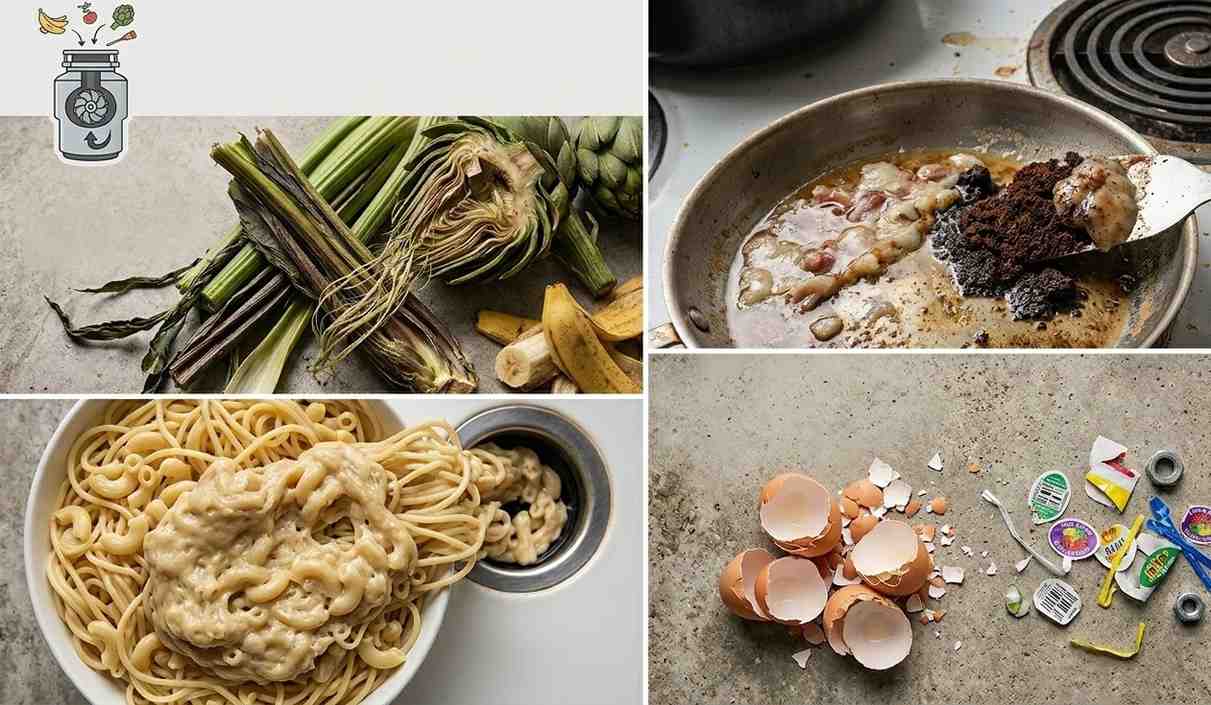
Fibrous foods are like a string in your disposal. They may get entangled in the grinding elements and diminish efficiency.
They can jam and sometimes need a professional service if they become wound around internal components.
Many homeowners think that coffee grounds are harmless because they are so small. But coffee grounds do build up in pipes and end up forming a thick sludge.
This sludge catches other debris and helps to clog drains. A little bit of coffee grounds may not be a problem, but if you’re disposing of coffee grounds often, you could have big plumbing problems.
Eggshells continue to be one of the most controversial items to dispose of. Some think that they clean blades, but they don’t.
Disposal parts can become enveloped in a very thin membrane within the eggshell. At the same time, crushed shell particles mix with grease and other particles to form pipe blockages. So, it is safer to dispose of eggshells in the garbage or compost pile.
These foods continue to retain water once they go to your disposal. They form thick masses which can cause the motor in its disposal to overwork and get clogged in pipes.
Small amounts can still swell up a lot if they are inside plumbing systems.
The peel of a potato tends to become a starchy pulp when pulverized. This paste adheres to the pipes and disposal chambers. It forms stubborn deposits over time that cause the water flow to decrease.
While garbage disposals are powerful, they are not meant to crush extremely hard objects.
The grinding components can be damaged by these hard materials, and the motor can burn out.
Occasionally, small fish bones pass through. Larger bones, however, can cause serious damage to your disposal.
If you’re not sure, put bones in the trash.
The other hidden problem is sticky foods. They stick to walls for disposal or to pipes.
These substances settle and draw more in, causing more clogs to occur.
Shrimp shells, crab shells, and lobster shells can do surprisingly harm! These materials do not grind easily. Rather, they form sharp particles that can clog pipes or wreak havoc on disposal parts. Therefore, any seafood shells must be placed in the garbage.
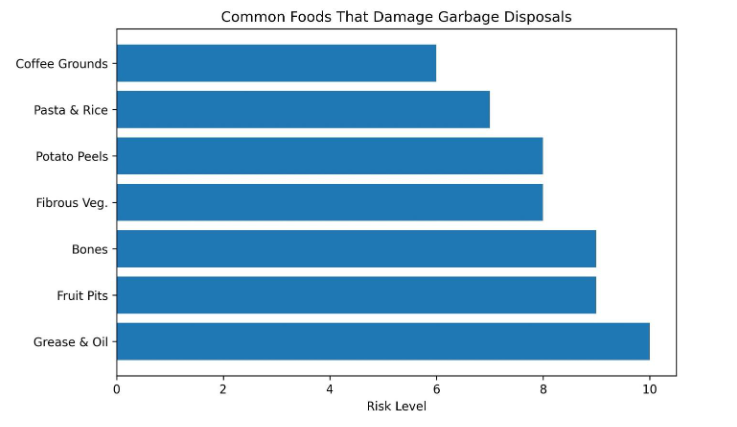
Common Foods That Damage Garbage Disposals
Estimated relative risk level of common disposal-clogging foods.
Look for the following signs and symptoms:
Backing up water in the sink due to high water pressure.
The following signs may indicate that your disposal has already started to experience the effects of poor food disposal practices.
Luckily, there’s an easy solution to protecting your disposal.
These everyday tips can help your disposal last longer.
Don’t wait for a complete disposal failure to address plumbing issues. Our skilled garbage disposal and plumbing technicians at Magnificent Plumbing & Rooter can provide a thorough examination, repair, and maintenance on your garbage disposal and plumbing. Call Magnificent Plumbing & Rooter now to maintain a problem-free kitchen and avoid expensive drain issues in the future.