Enquire Now



Enquire Now
 Published: July 22, 2026
Last Updated: August 4, 2026
Published: July 22, 2026
Last Updated: August 4, 2026
Hard water is a common problem in many homes. Rich in minerals such as calcium and magnesium. These minerals are not toxic to humans or animals but can cause a number of problems in the home. Thus, it is important to know the early warning signs so you can avoid damage to your plumbing, appliances, and wallet.
If you see a few of the symptoms below, you may need a water softener.
The minerals in the water are deposited over time in hard water. This results in the deposition of these minerals on fixtures, pipes, and appliances. In addition, hard water may cause problems with cleaning and raise expenses in the home.
White deposits on dishes and drinking glasses are one of the most tell-tale signs of hard water. Your glassware may still be cloudy after washing.
This occurs when the water dries up, leaving mineral deposits in the tank. Thus, your dishes never look entirely clean.
Do you find that soap is not working as well? Hard water interferes with the formation of a good lather with the soap. So, you usually washing more than you need. Furthermore, soap scum may accumulate on the walls of tubs, on sinks, and on shower walls.
Hard water can have a negative impact on personal comfort. Dry skin is a common problem with many homeowners after showering. Similarly, hair can appear lifeless, brittle, and unmanageable.
The minerals form a barrier that allows soap and shampoo to remain on the hair and not be completely rinsed out. This means that your skin and hair may not feel as clean.
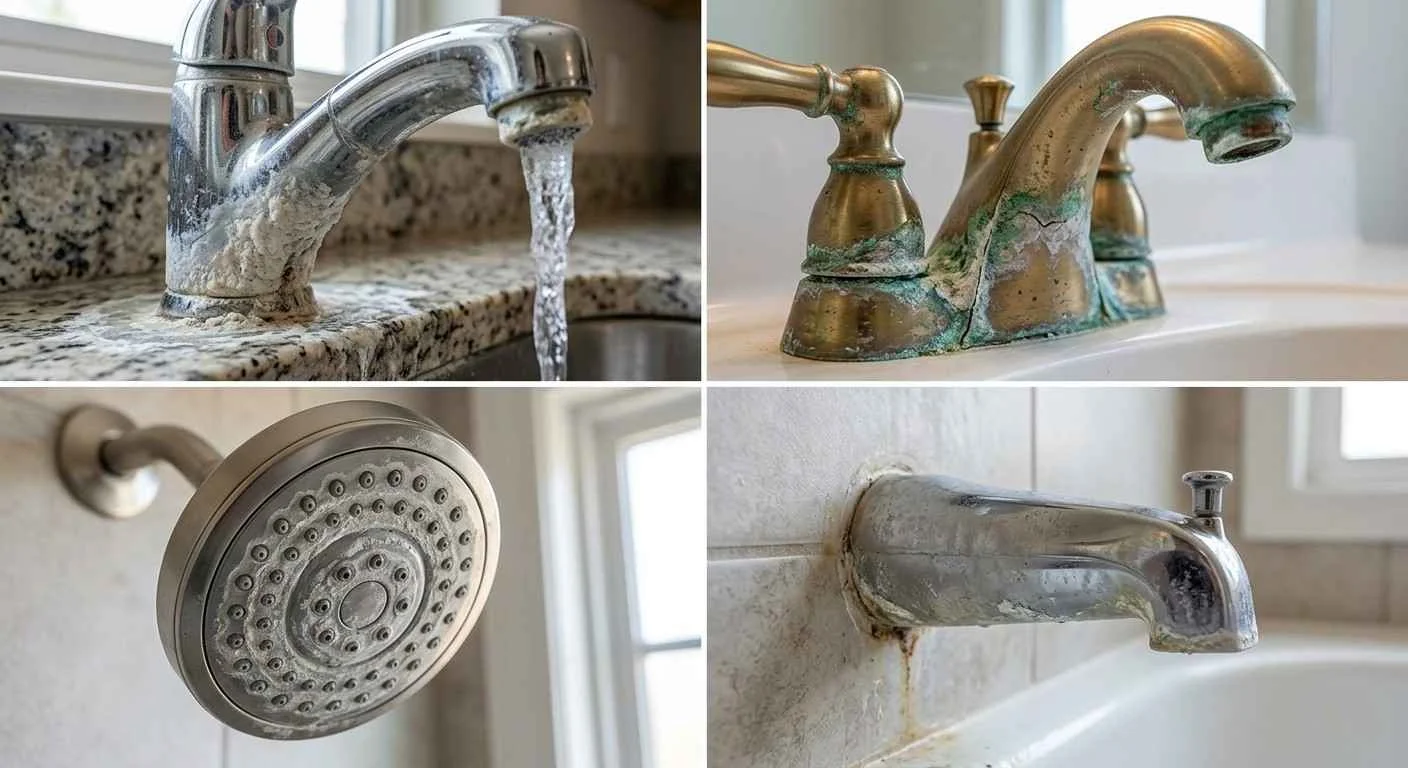
Inspect all faucets and showerheads. Chalky-white deposits are a sign that the hard water is to blame. These mineral deposits, over time, limit water movement. As a result, fixtures might not work as effectively.
Hard water causes more than just problems that can be seen. Scale can build up in the interior of water heaters. The more this builds up, the more effort the heater will have to expend. Hence, the more energy that is consumed. At some point, you might see an increase in your utility bills.
Hard water will roughen clothes after washing. Fading could occur more rapidly. Additionally, fabrics can lose their softness and durability. Clothing is likely to wear out faster as minerals get trapped in the fibers.
Mineral deposits aren’t limited to faucets. Scale is formed within pipes over time. As a result, there may be a decrease in water flow. In extreme cases, plumbing repairs will be required. So it’s best to treat hard water before it can cause expensive problems.
Water is used for your dishwasher, washing machine, and water heater. These devices have to perform more work in hard water. This, in turn, reduces efficiency. Additionally, the costs of maintenance tend to go up. A water softener will minimize mineral deposits and prolong the life of appliances.
If you’re scrubbing bathroom surfaces over and over, it could be hard water. Hard water can be the culprit if you’re scrubbing bathroom surfaces over and over.
When soap is mixed with minerals, it forms a hard residue. Thus, cleaning is more time-consuming. In addition, bathrooms can never be clean after a thorough cleaning.

There are numerous possible causes of low water pressure. But it can be caused by hard water as well.
Mineral deposits will cause the openings in the pipes to become smaller as time passes. This means water flow decreases across the house. If water pressure keeps decreasing, you may want to check your water hardness.
A water softener will filter out excess minerals before they make their way into your home. For this reason, householders can enjoy a number of benefits:
Thus, a water softener can be beneficial in the short and long term.
No need to wait for big plumbing problems. Rather, test if you see several items on this list. Early detection means that you will limit costly repairs. In addition, it enables you to choose wisely among some of the solutions regarding water treatment.
If you think that hard water is having an impact on your house, call Magnificent Plumbing & Rooter now. Our knowledgeable staff will conduct a thorough evaluation of your water and inform you of the best solution to address this issue and keep your plumbing healthy for years to come.
