Enquire Now



Enquire Now
 Published: December 21, 2025
Last Updated: December 10, 2025
Published: December 21, 2025
Last Updated: December 10, 2025
Water emergencies come without notice and very swiftly. The main pipe bursting, the heater leaking, or even a tap losing water can soak your house in no time at all. Thus, you must do something really fast. The best first step is dull but simple: shut off the water at the main valve of your house. Many people living in dwellings panic because they do not know where the valve is or how to use it. However, if you follow the right advice, you can easily get through the situation.
In this informative post, you will learn a clear and practical process. And in the middle of this blog, you will also see how Magnificent Plumbing & Rooter can support you during emergencies.
Water spreads fast. It penetrates down to floors, up to walls, and into furniture. Very soon, the bills for the repairs start to mount. Thus, prompt action helps to protect your house and, at the same time, saves money.
Additionally, when the valve is shut, no more water can enter your plumbing system. Hence, the leak is either slowed down or stopped entirely. This allows you to have a moment to breathe, think, and call a professional.
There is one main shutoff valve in every house. But its location varies. So let’s break down the common spots.
Most modern homes place the valve indoors. It often sits:
Look for a pipe entering from the outside. It usually leads directly to the valve.
Older homes often place the valve outside. You may find it:
Open the box carefully. You might see a simple lever or a round wheel-style valve.
One of two typical valve patterns will appear.
This valve consists of a straight metal handle. It usually lies parallel to the pipe. Rotate the handle by 90 degrees. When the handle is in a horizontal position, the water flow is cut off.
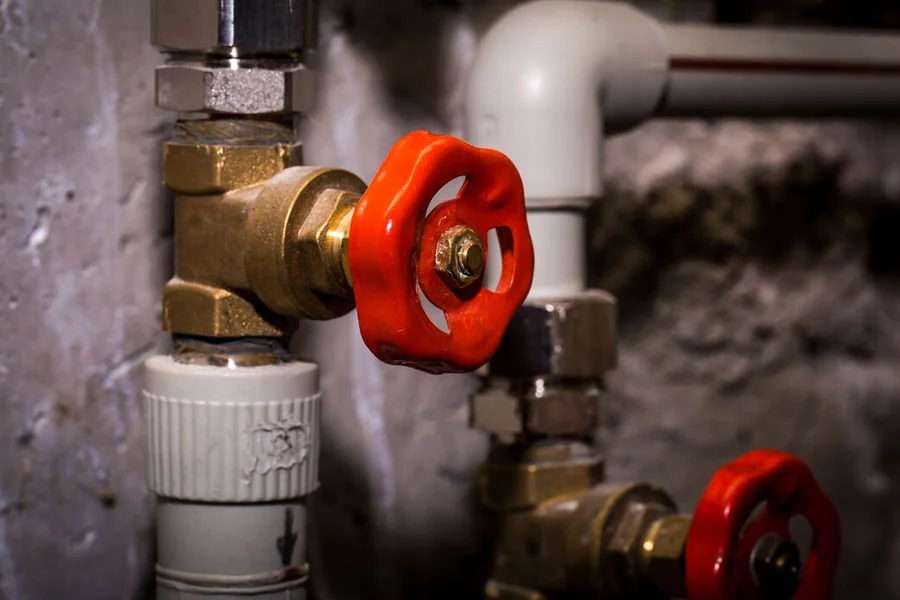
This valve uses a circular handle. Keep turning the wheel clockwise until it stops. It may require several turns.
Both are simple to operate once you know the type.
Having located the valve, it is time to close it. Move your hand smoothly but firmly. For ball valves, turn the lever once. For gate valves, keep turning them until they stop. If the valve is tough to turn, don’t exert too much pressure. Instead, repeat the action with controlled pressure.
At this point in the emergency, you will likely need professional assistance. Magnificent Plumbing & Rooter provides fast, dependable service. Their staff is quick to respond, offers guidance, and even helps in damage control.
Water in specific amounts will always remain in the pipes even after the valve has been turned off. Thus, it is advisable to release the pressure.
Let a few faucets run. Start from the lowest point in your house, for instance, a bathtub on the first floor. After that, open a faucet on the top floor. Water will flow out, and pressure will not build up. This small yet very effective step reduces mess and makes it easier and safer for plumbers to work.
As soon as the water flow is stopped and the pressure is lowered, inspect the emergency source.
Place a bucket under the damaged spot. Wrap the pipe with a thick towel or tape. This slows any remaining drips.
Turn off its power supply. For electric heaters, switch off the breaker. For gas heaters, turn the gas valve to OFF.
Cover the broken area. Use towels or plastic wrap to control the spray or drips.
These steps keep the situation stable until a technician arrives.

You can avoid panic by preparing in advance.
Use a bright tag or sticker. Everyone in your home should know the location.
Test it once every few months. This prevents the valve from sticking.
Power can go out during storms. A flashlight helps you stay calm and focused.
Kids and seniors should know where it is, too. Emergencies don’t wait for you to be home.
